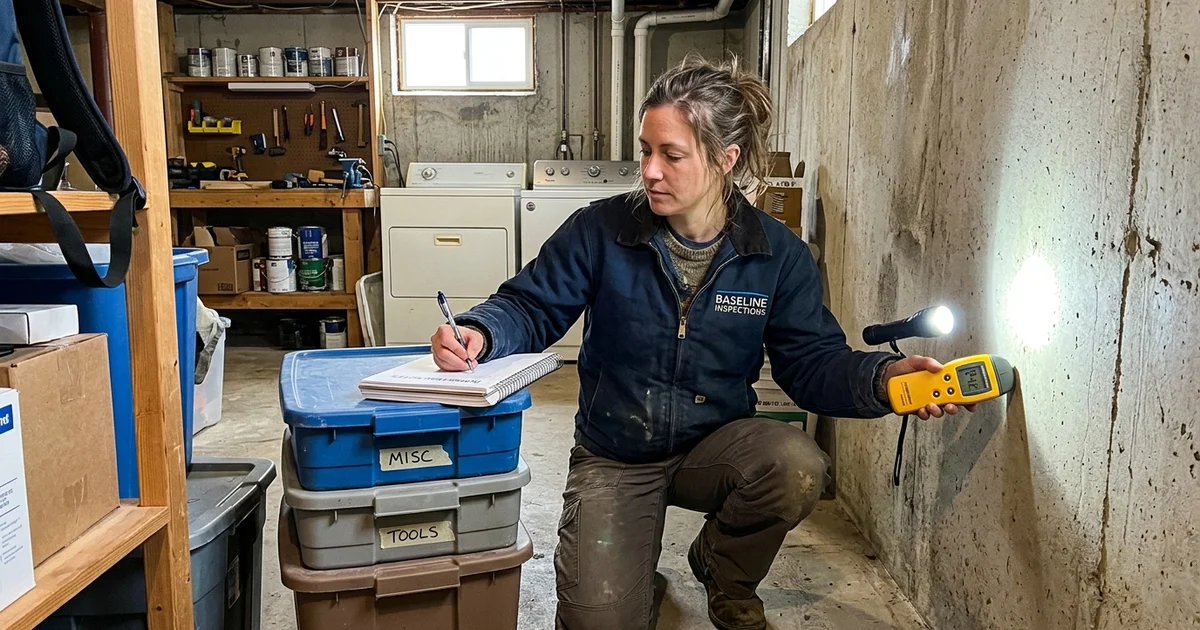
We see the same agonizing decision every time a family steps into an overwhelmed estate. You are standing in a house filled with decades of belongings, spotting dark patches on the walls, and debating mould inspection vs remediation.
Our team knows that making the wrong call here wastes both precious time and money.
According to recent Canadian data, estate cleanouts involving hoarding can stretch timelines from three weeks to over twelve weeks if hazardous materials are mismanaged. We want to help you avoid those delays, so let’s look at the data and explore a few practical ways to respond.
The Question Behind the Question: Mould Inspection vs Remediation
We know that families asking about this sequence are usually worried about a deeper issue. You are likely wondering if you are about to spend $300 on standard air testing that merely confirms what is already visible, or if you will clean the wrong area. Our experience shows this is a valid concern, especially since Statistics Canada reports that roughly 13% of Canadian households experience indoor mould.
Both of these financial and health risks are completely real. The correct answer depends almost entirely on whether you can visibly see the fungal growth and physically identify the water feeding it.
We use a simple framework to make this decision easy.
Remediate Directly When
Immediate action is always our advice when the fungal growth is visible and the moisture source is obvious. Health Canada clearly states that any visible mould should be cleaned up regardless of the species. You do not need a laboratory to confirm what your eyes already see on a basement wall beneath a known leak.
Our protocol skips testing when dealing with a well-defined, contained area. A single wall or a specific section of stained attic sheathing with a venting issue is straightforward. Using moisture meters to map the unaffected dry areas surrounding the damage is usually enough of an assessment.
Protecting Your Estate Budget
We recognize that budget is a massive factor during a complex estate clearance. Every dollar spent on confirmatory air testing is a dollar taken away from actual removal or fixing the underlying leak.
In 2026, average professional remediation in Canada runs around $2,500, but severe hoarding situations can easily exceed $10,000. Therefore, skipping the $300 to $700 standard testing fee makes financial sense when the diagnosis is clear.
Key Signs for Immediate Removal
- Growth is visibly spreading across drywall after a reported water loss.
- The affected area is larger than Health Canada’s 10-square-foot threshold for DIY cleanup.
- The moisture feeding the problem has been definitively located.
- Unaffected surrounding materials read completely dry on a moisture meter.
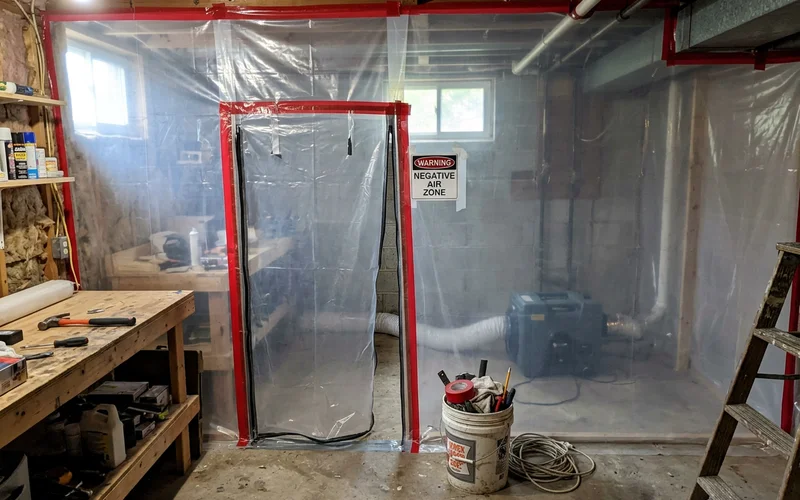
Our technicians proceed directly to containment and mould remediation in these exact situations. Fixing the moisture source remains the only way to guarantee the problem never returns.
Test First When
We highly recommend air sampling when you suspect contamination but cannot actually see it. A persistent musty smell with no identifiable source in a cluttered home is a major red flag. Testing establishes whether elevated spore counts exist, which prevents contractors from smashing open the wrong walls.
Our approach immediately shifts to testing when occupants are symptomatic or particularly vulnerable. If an older adult, a child, or someone with asthma or COPD is affected, deciding to test mould before removal changes the entire urgency of the project. You can read our guide on attic mould and musty smells to see what warning signs to look for first.
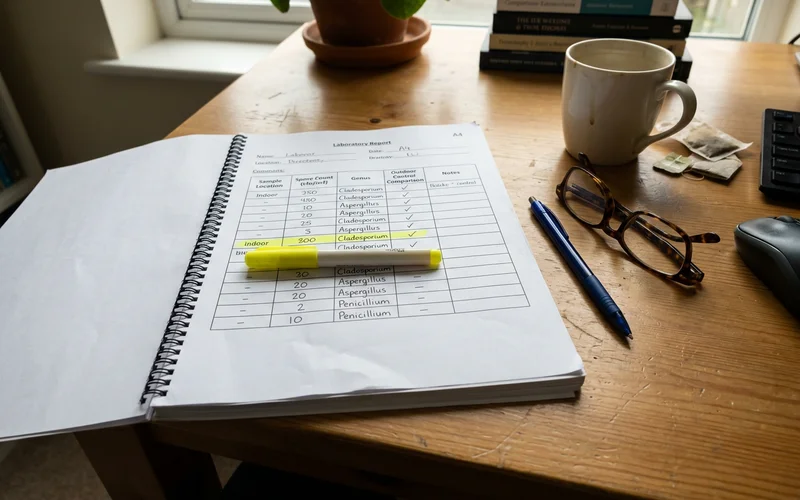
We require upfront testing whenever a legal or financial dispute is active. Landlord and tenant disagreements, specifically Section 30 LTB applications in Ontario, demand hard evidence. Documented sampling compared against an outdoor control holds up in court or during an insurance claim, whereas a contractor’s simple opinion does not.
Complex Scope and Boundaries
Our teams use testing to define boundaries when the suspected area is massive or unclear. In severe estate clearances, determining the edge of the contamination saves thousands of dollars in unnecessary drywall removal. The goal is always to return the property to what the ANSI/IICRC S520 standard calls Condition 1, or a normal fungal ecology.
The Middle Path Most Jobs Take
We usually execute a hybrid sequence on standard residential jobs. A thorough visual inspection paired with comprehensive moisture mapping always happens first. Then, the decision about lab sampling is made based on the exact evidence uncovered during that walkthrough.
Our inspectors rely on FLIR thermal imaging cameras and penetrating moisture meters to locate hidden water. That specific data is far more diagnostic than a spore count alone. It tells you exactly what pipe or roof section to fix, rather than just identifying what species of fungus is growing in the corner.
We only add sampling to the invoice if the results will actively change the removal strategy.
The conflict-of-interest question
A company that both tests and remediates has an obvious incentive to find a problem. Ask for the outdoor control comparison and the laboratory report rather than a summary, and ask directly whether the recommendation would change if the numbers were lower. For larger commercial jobs, an independent assessor is a reasonable request and we will work alongside one.
Working With Independent Assessors
Our policy is to welcome the presence of a third-party Indoor Environmental Professional (IEP) on large or complex claims. Using a separate testing firm eliminates any conflict of interest. This separation of testing and removal duties guarantees you are only paying for the exact cleanup required.
Clearance Testing Afterwards
We consider post-remediation verification, often called PRV, the one test that consistently earns its cost. This vital step samples the air or surfaces after the cleanup is finished. The lab then compares these indoor results against a fresh outdoor control sample to prove the environment is safe.
Our teams rely on this testing because it demonstrates that indoor counts have officially returned to normal baselines. It is the only objective, scientific confirmation that the physical removal actually succeeded. Skipping this final check leaves families guessing whether microscopic spores are still lingering in the air.
We know this documentation matters immensely for real estate transactions and insurers. Buyers, tenants, and landlords defending a health complaint need a documented clean bill of health. Households with vulnerable occupants require much more than a verbal assurance that a room simply looks fine now.
Benefits of Final Verification
- Provides a legal document for future property sales.
- Protects landlords against ongoing tenant liability.
- Validates that the contractor successfully followed the IICRC S520 guidelines.
- Grants immediate peace of mind to grieving families settling an estate.
How Sequencing Affects Cost
We have seen upfront testing save clients significant money by scoping the project correctly from day one. Opening the right wall immediately prevents collateral damage to clean areas. It also removes the risk of needing a secondary cleanup phase later, which easily adds another $2,000 to $5,000 to your total bill.
Our experience also shows that testing first can waste money when the diagnosis is already obvious. Waiting three days for lab results delays the physical labour and stalls the entire estate clearance timeline. Adding a $400 line item that changes absolutely nothing about the work plan is incredibly frustrating for families on a strict budget.
Making Your Final Decision
We provide a straight, honest answer at the initial assessment about which case applies to your property. If running air samples would not change what our crews do, we say so immediately. Protecting your budget while ensuring a safe, clean home is always our top priority.
We encourage you to contact our team today if you are facing a massive property clearance and need professional guidance. Booking a visual inspection is the fastest way to get clarity on your next steps. You do not have to figure out mould clearance testing or mould inspection vs remediation on your own.