The Musty Smell Is the First Signal
We frequently walk alongside executors and families managing overwhelming estate cleanouts.
You know how that heavy, musty smell in the house hits you the moment you open the front door of a long-closed property.
Our team knows this smell is not just stagnant air, but an active chemical warning sign.
These odours come from microbial volatile organic compounds (MVOCs) released during active fungal growth.
We always stress that tracking this scent is the critical first step in any mould inspection and remediation assessment.
The following guide will examine the latest building data, identify the true moisture sources, and lay out a practical roadmap for safe property recovery.
Why Attics Are Where It Usually Is
Our inspections reveal that attics act as massive traps for warm, humid air rising from the living spaces below.
This trapped humidity creates a perfect breeding ground for fungal growth, rather than a leaking roof.
We constantly see older family homes where decades of poor ventilation have caused hidden damage.
In an Ontario winter, warm interior air hits freezing roof sheathing and immediately condenses.
Our current data shows this condensation worsens significantly when relative humidity stays above 60 percent.
Common attic mould causes include:
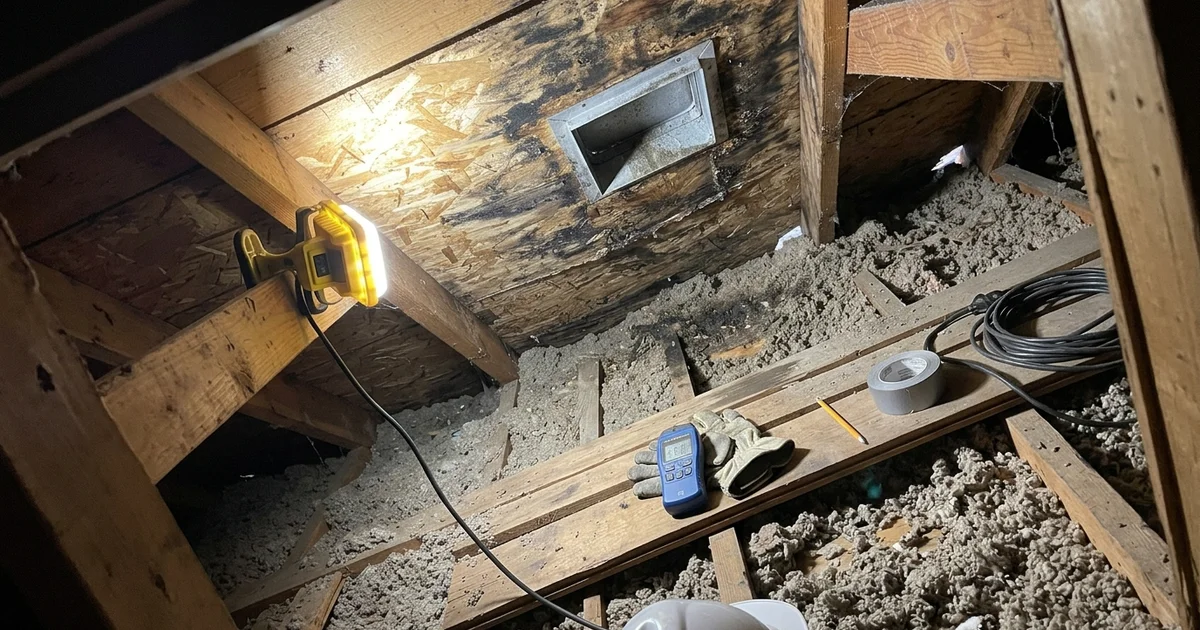
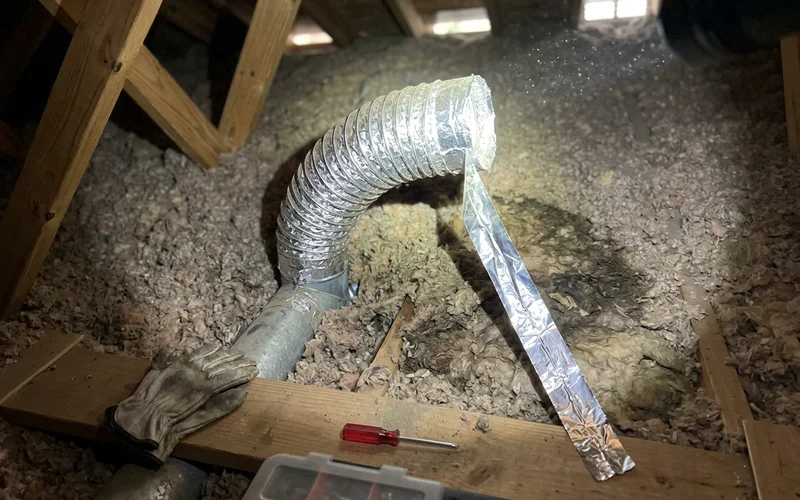
- Code-Violating Exhaust Fans: Bathroom fans venting directly into the cold attic deliver concentrated moisture right where it causes the most harm.
- Inadequate Insulation: The 2026 Ontario Building Code requires a minimum of R-60 insulation for most new attics, yet older estates often have a fraction of this protection.
- Blocked Soffit Vents: Crammed insulation or stored boxes blocking the soffits prevent the attic from exchanging air properly.
We often discover the result as dark, heavy staining across the north-facing slope of the roof sheathing.
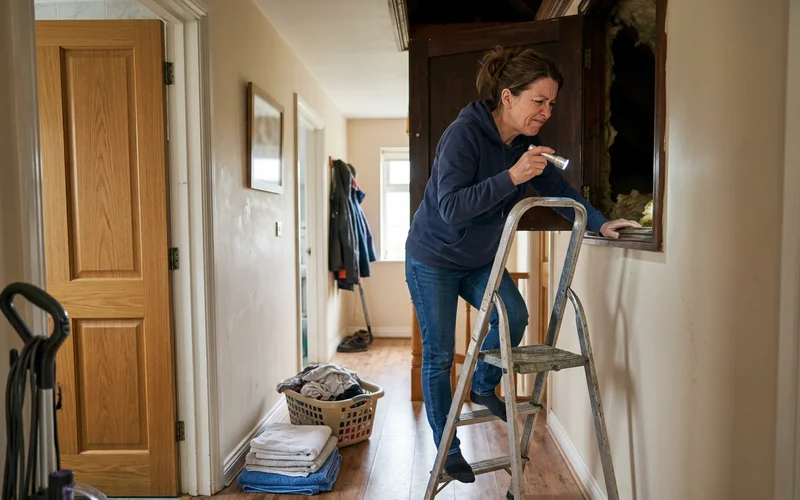
Homeowners typically uncover this shock during a home inspection for an estate sale.
About “Black Mould”
Our environmental assessments frequently encounter questions about toxic black varieties.
The phrase usually refers to Stachybotrys chartarum, which warrants strict caution and links to prolonged water damage.
We want to emphasize that colour is never a reliable identifier for these hazards.
Health Canada guidelines confirm that common dark-coloured species like Cladosporium require the exact same removal protocols as Stachybotrys.
Our preferred approach focuses on the environment, as this species specifically targets high-cellulose materials like paper-backed drywall and old cardboard boxes.
The table below outlines key facts executors need to know before touching anything.
| Common Myth | The Verified Fact |
|---|---|
| Colour indicates danger | Many benign species are black, while dangerous ones can be green or white. |
| Bleach solves the issue | Surface cleaning ignores the deep moisture source and root systems. |
| It only grows after floods | A 2026 report notes it can grow from persistent high humidity alone. |
We rely on professional testing only when occupants show severe symptoms, or when legal disputes require hard evidence.
The practical response remains identical: contain the area, remove the growth safely, and eliminate the moisture source.
Our teams always keep regional climate factors in mind during these inspections.
Local context
Escarpment and valley locations such as Dundas, along with older housing stock across the lower city and Ancaster, carry higher baseline humidity and more limited original ventilation. Attic and basement growth is correspondingly more common here than in newer subdivisions.
The Health Signals to Watch
We urge families clearing out properties to monitor their physical reactions closely.
The most telling health signal is sinus irritation or fatigue that magically improves the moment you leave the house.
Our safety protocols prioritize these symptoms because Canadians spend roughly 90 percent of their time indoors.
Asthma Canada reports that building dampness can increase the risk of respiratory issues by up to 50 percent.
Children, older adults, and anyone immunocompromised react strongly at concentrations others might tolerate.
We carefully observe several specific physical changes during estate cleanouts:
- Coughing and throat irritation without a clear seasonal allergen source.
- Worsening asthma control in someone who was previously stable.
- Persistent headaches that clear up after leaving the property.
Our guide on symptoms and when to test covers this precise pattern in more detail.
What Remediation Involves
Our remediation process always begins with strict containment and negative air pressure to protect the rest of the home.
Disturbing established growth releases massive numbers of microscopic spores into the breathing zone.
We strictly adhere to industry standards that require the physical removal of affected porous materials.
HEPA vacuums capturing 99.97 percent of particles down to 0.3 microns are then used on semi-porous framing.
Our teams consider correcting the root cause to be the most critical phase of the entire job.
Rerouting bathroom fans through the roof and establishing proper ventilation prevents the nightmare from returning.
We always warn clients that treating the surface without fixing the airflow merely resets the clock.
The table below contrasts a standard temporary fix with a permanent, code-compliant solution.
| Method | Approach | Long-Term Result |
|---|---|---|
| Chemical Cover-Up | Spraying bleach or biocides without addressing ventilation. | Growth typically returns within 12 months. |
| Complete Remediation | Physical removal, HEPA filtration, and upgrading to R-60 insulation. | Permanent resolution of the moisture trap. |
We offer a free inspection to executors and families to pinpoint exactly what you are dealing with.
Reach out today for a professional assessment, and take the first step toward reclaiming the property safely.