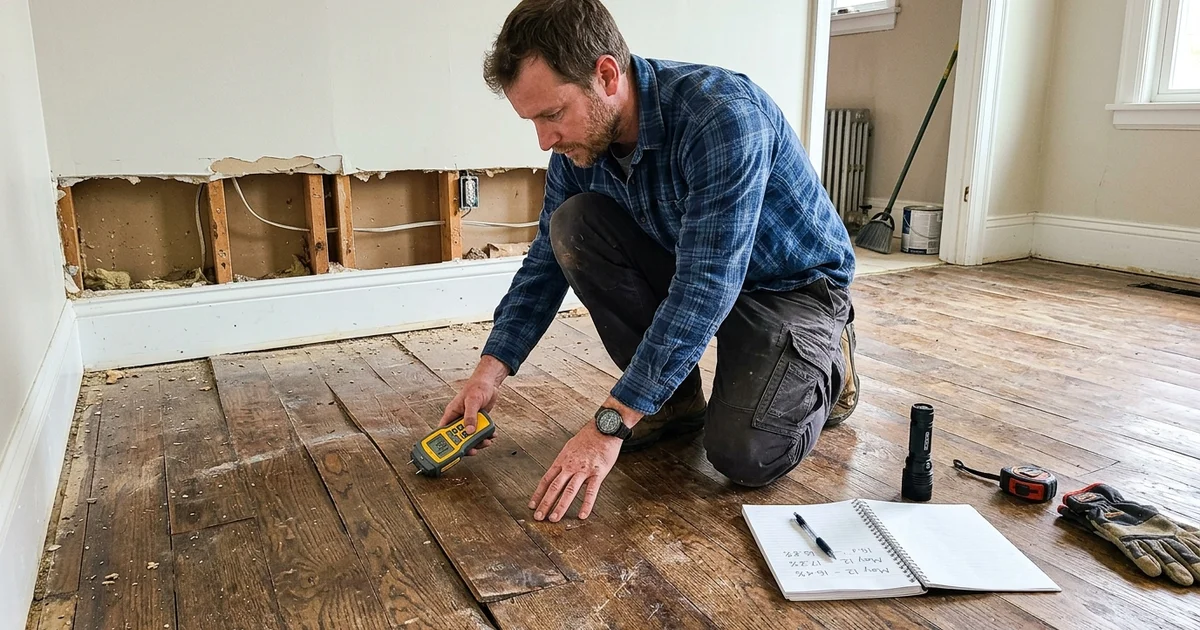
Our professional service team frequently sees how a basic water damage restore vs replace scenario becomes an urgent financial puzzle during an estate cleanout. This compounding crisis forces families into a race against the clock to prevent aggressive mould growth.
The basic rule for these environments comes down to moisture extraction speed and strict decontamination limits.
We rely on this clear framework to determine how water damage restoration scopes are built. These guidelines dictate if a wet item can be saved safely or if it must go straight to the disposal bin. Let’s look at the data, what it actually tells us about material recovery, and outline a practical plan to guide your decisions.
The Principle Behind Every Decision
We decide whether a material is restored or replaced by answering two fundamental questions. Can the moisture be removed before permanent ruin sets in, and can the item be adequately decontaminated based on the specific water category? The standard rules of physics and hygiene dictate the final verdict.
Our initial assessment always classifies the incident following the IICRC S500 guidelines, which act as the legal standard across Canada. Category 1 covers clean water from supply lines, while Category 3 involves grossly contaminated black water. Rapid drying is almost always cheaper, faster, and less disruptive to an estate if a clean water loss is caught immediately.
We recognize that replacement becomes the only defensible option if the moisture cannot be removed quickly or if contamination is severe. You simply cannot risk leaving hidden bacteria inside a home. This strict protocol protects the property value and ensures a safe environment for the people handling the cleanout.
Material by Material
We evaluate every single building material based on its porosity and its reaction to prolonged moisture exposure. Most solid framing components recover easily, while engineered products usually require complete demolition. The exact costs and recovery chances vary drastically between these distinct building products.
Wall Systems and Framing
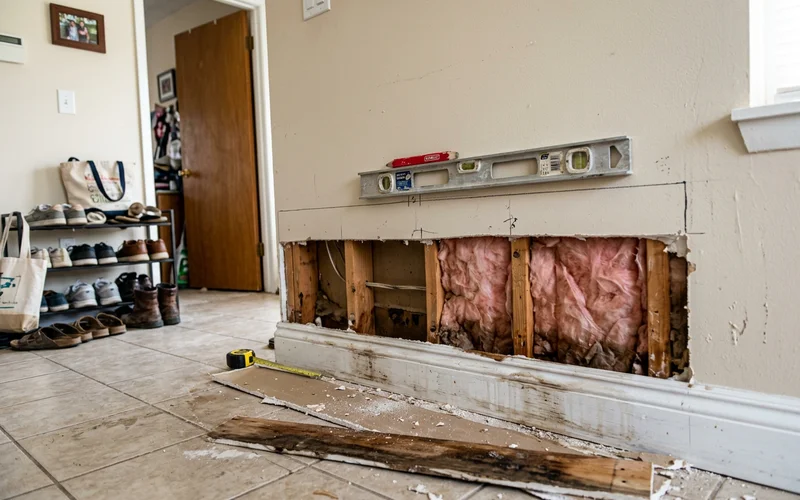
Our technicians often salvage drywall after a clean water loss if aggressive dehumidification starts within 48 hours. Gypsum releases moisture reasonably well with proper airflow. The decision to save or replace water damaged drywall completely depends on catching the problem before this critical window closes.
We perform a flood cut to remove the affected lower band if the wallboard softens, if insulation gets wet, or if Category 2 or 3 water is involved. Fibreglass batts lose their loft once saturated and trap water against the wood. Wood studs and concrete foundations release moisture slowly but almost always survive unless prolonged saturation causes dry rot.
Flooring Types
We frequently use specialized injection mats to salvage flooring water damage, pulling moisture up directly from the subfloor. Minor cupping often relaxes naturally as the wood fibres reach an equilibrium. Replacing flooded hardwood costs anywhere from $2 to $10 per square foot in Canada, so saving the original planks provides significant financial relief for an estate.
Our success rate drops to zero when dealing with laminate or engineered wood products. The plywood core beneath the veneer swells irreversibly, and the water breaks down the adhesive holding the layers together. These floating floors also trap hidden pools of water underneath them, forcing complete removal to dry the underlying plywood subfloor.
| Flooring Material | Salvage Potential | Common Reaction to Water |
|---|---|---|
| Solid Hardwood | High | Minor cupping; treatable with mat drying. |
| Engineered Wood | Low | Adhesive breaks down; layers delaminate. |
| Laminate | None | Core swells irreversibly; traps moisture. |
Soft Goods and Insulation
We treat carpet salvageability strictly based on the water contamination level. A Category 1 event allows for extraction and inplace drying, though the underlay padding requires immediate disposal. Category 2 incidents might allow the top carpet to survive, but Category 3 sewage backups mandate that everything goes to the landfill immediately.
Our cleanup crews completely strip out wet cellulose or saturated fibreglass insulation. Closed cell spray foam resists moisture intrusion much better and often stays in place. Plywood subfloors dry successfully most of the time, whereas particleboard swells rapidly and loses all structural integrity.
Contents: Pack-Out and Triage
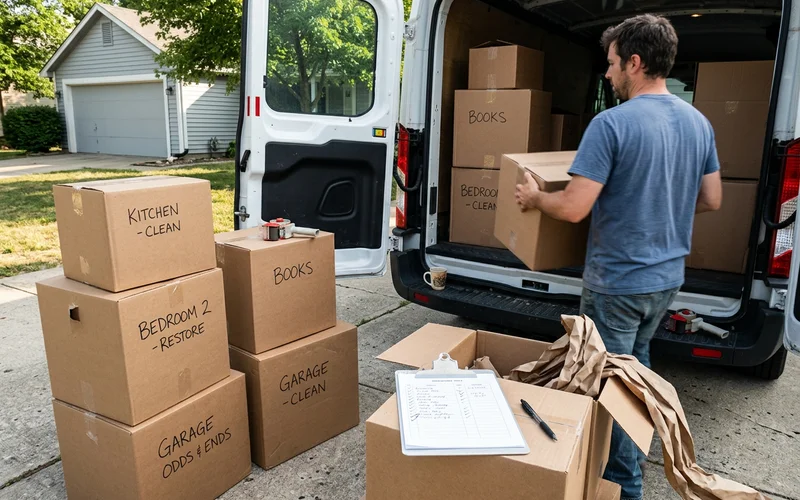
We triage all personal belongings into three distinct groups to control costs and prevent cross contamination. Every item is designated for onsite cleaning, offsite restoration, or immediate disposal. A room packed with hoarded belongings traps humidity and stops the building structure from drying out.
Our team handles hard surface items, sealed goods, and easily cleaned furniture right there on the property. This onsite approach keeps the most basic recovery efforts simple and affordable. Textiles, critical documents, and delicate electronics require controlled environments and specialized ozone treatments.
We photograph, inventory, and pack out these vulnerable pieces to an offsite facility. Removing this heavy physical clutter protects the valuables while drastically accelerating the structural drying timeline. Anything saturated with Category 3 black water, porous materials harboring bacteria, and cheap items costing more to clean than replace get documented for the insurance claim and discarded.
A note on sentimental items
Our restoration specialists need to know about highly valuable or sentimental pieces before the heavy disposal work starts. Photographs, documents, and heirloom textiles with personal significance can often survive through specialized freeze drying processes. That choice rests entirely in your hands, but the decision must happen before the garbage bins leave the driveway.
How Time Changes the Answer
We see the exact same materials transition from fully salvageable to completely ruined based entirely on the clock. Every single surface in a flooded home faces a much bleaker prognosis at day three than it did at hour six. Health Canada warns that mould can bloom on damp organic materials in as little as 24 to 48 hours.
Our commercial equipment cannot reverse the damage if porous items sit in standing water for too long. The destruction accelerates rapidly across different building materials. Here is how different materials degrade over time:
- Solid Oak Floors: Mat drying works on day one, but boards warp irreversibly by day four.
- Drywall: Damp gypsum survives early on, but becomes a toxic spore colony by the end of the week.
- Personal Belongings: Hard surfaces need a quick wipe initially, but absorb airborne contaminants quickly in a humid room.
We push incredibly hard for a rapid response time precisely because this ticking clock dictates the final invoice. The urgency has nothing to do with aggressively booking another job. The entire mathematical calculation of restoring versus replacing shifts aggressively against the estate with every passing hour.
Documentation and the Claim
We provide insurers with comprehensive daily logs to legally justify why specific materials were replaced rather than dried. Claims adjusters require hard evidence before approving major demolitions in an estate. A complete project file must contain four essential pieces of proof.
- Moisture meter readings: Tracking the exact water content in framing and drywall.
- Detailed photographs: Showing the visual extent of the flood lines and damages.
- Water category classification: Documenting whether the liquid was clean or contaminated.
- A written scope of work: Outlining every action taken on the property.
Our final reporting clearly states the exact reasons why a restoration attempt failed or was deemed impossible from the start. Daily monitoring logs prove that successful drying efforts were scientifically verified with thermal imaging rather than just assumed. The complete guide on filing the insurance claim explains exactly what local Canadian carriers will demand during an audit.
We always encourage families to ask for the actual moisture readings if a contractor claims every wall must be demolished. The data sometimes justifies a complete gutting, especially in a cluttered home where hidden water spread for weeks.
Other times, the numbers reveal that a localized repair would solve the problem perfectly.
Our experts are ready to step in if you are managing a difficult property cleanout and need an honest assessment. The final water damage restore vs replace verdict always requires professional testing to guarantee safety. Contact a certified restoration specialist today to schedule your immediate moisture inspection.