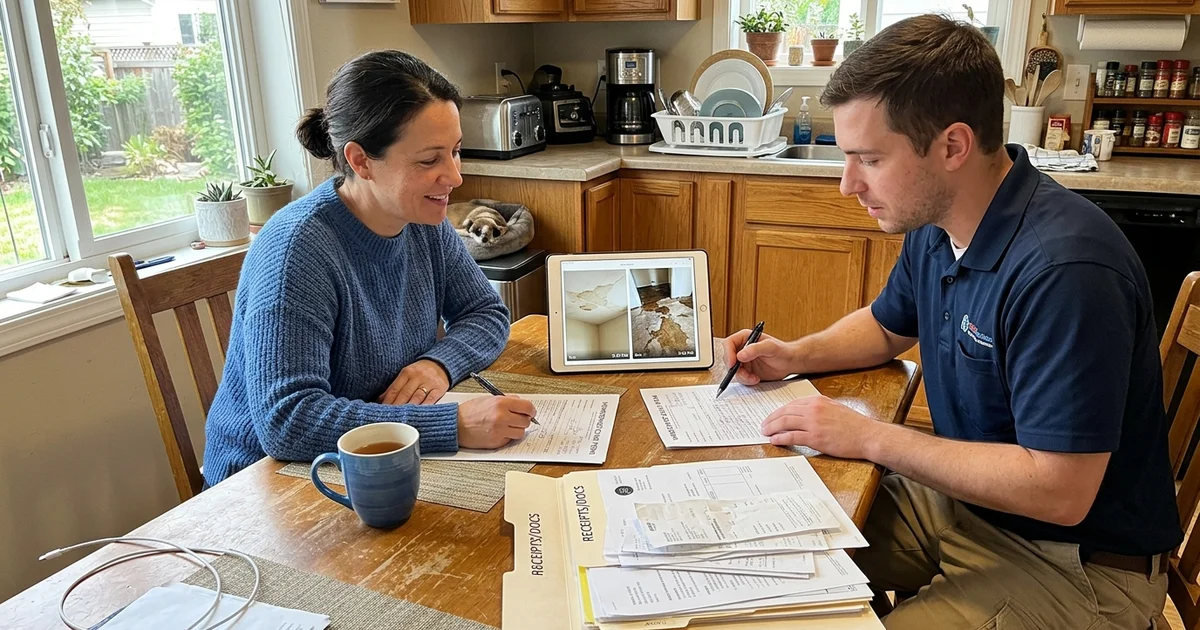
Managing an estate clearance or a hoarding situation is emotionally taxing enough without discovering a hidden plumbing disaster.
Families frequently panic when they move boxes and uncover years of hidden rot.
We know a home insurance claim water damage ontario policy can be the difference between a manageable cleanup and financial ruin.
Let’s look at the data behind these policies and outline practical steps for securing coverage. This guide breaks down exactly what adjusters look for and what resources you need. We designed this framework to process complex water damage restoration claims efficiently.
What Is Usually Covered In A Home Insurance Claim Water Damage Ontario
Ontario policies generally respond to water events that are sudden and accidental. ViewHomes 2026 data reveals that a typical residential water claim now costs between $25,000 and $45,000. We know this financial hit is devastating for a family already managing a complicated estate.
That is why understanding your exact coverage is critical. The classic covered events include a burst supply line, a failed water-heater tank, or an appliance hose letting go. Our crews regularly handle these sudden disasters in unoccupied estate homes during the winter months.
An overflow caused by a mechanical failure also typically qualifies for coverage. When a policy covers the event, the claim usually includes several critical mitigation steps. We focus heavily on the rapid removal and replacement of unsalvageable materials.
Covered Mitigation Services
You can also expect coverage for emergency water extraction and professional drying. Contents restoration is another standard inclusion that helps save cherished family heirlooms. Our administrative staff can help you handle the paperwork for additional living expenses if the property is uninhabitable.
You should always confirm your specific limits with your insurance broker. Reviewing your policy declarations page takes only a few minutes. We strongly advise verifying these details before an emergency happens.
Standard Mitigation Allowances:
- Emergency water extraction
- Structural drying and dehumidification
- Removal of unsalvageable drywall and flooring
- Contents cleaning and storage
What Is Usually Not
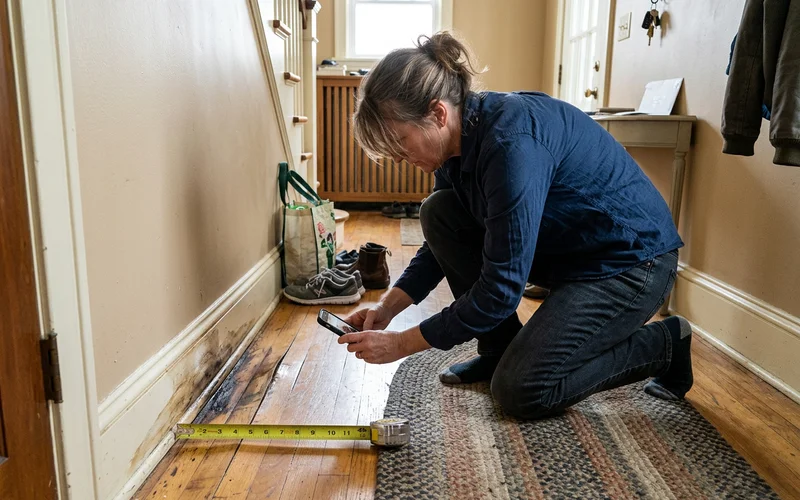
Gradual leaks and seepage are almost universally excluded from standard policies. A slow leak that rots a subfloor beneath piles of hoarded belongings over two years is generally denied. We see these heartbreaking denials frequently during major estate cleanouts.
Adjusters deny these claims on the reasoning that the leak was discoverable and preventable. Failed caulking, aging roofing, and known plumbing issues left unaddressed fall under deferred maintenance. Our experience shows that neglected maintenance is the fastest way to void your coverage.
Sewer backup without the specific endorsement catches the most people off guard. Most standard policies completely exclude it by default. We always remind clients that this endorsement is a separate purchase requiring explicit activation.
Strictly Enforced Policy Exclusions
Overland flooding is another distinct coverage that requires a specific add-on. Water entering at ground level from heavy rainfall is not automatically covered. Our restoration teams cannot bill your insurance if you lack this specific overland water rider.
Mould arising from chronic humidity or long-term neglect is typically excluded. The 2024 Insurance Bureau of Canada reports show water damage makes up 68 percent of all property claims. We highly recommend addressing any dampness immediately to avoid these strict exclusions.
Conversely, mould that resulted from a promptly reported covered water loss is usually part of that claim. Fast action proves the damage was a direct result of the sudden emergency. Our technicians document the timeline carefully to ensure your secondary mould damage remains covered.
Common Exclusions Explained:
| Condition | Typical Status | Reasoning |
|---|---|---|
| Gradual seepage | Excluded | Considered a preventable maintenance failure. |
| Sewer backup (no rider) | Excluded | Requires a specific, optional policy endorsement. |
| Long-term mould | Excluded | Result of chronic humidity rather than sudden loss. |
The Sewage Backup Endorsement
Sewer backup coverage is a distinct policy add-on that is commonly needed but frequently absent. A backup occurs when municipal sewer capacity is exceeded during heavy rain. We consider this endorsement absolutely essential for homes with finished basements or stored estate valuables.
A lateral block or a severe storm can easily overwhelm the municipal system. Waste water then enters your home through floor drains, toilets, or basement fixtures. Our crews treat this as a Category 3 biohazard from the very first minute.
This classification requires extensive material removal and full hospital-grade disinfection. CoverCheck 2026 data indicates the average sewer backup claim in Canada now costs between $25,000 and $50,000. We want you to avoid paying this massive bill out of pocket.
The Financial Impact of Backups
Without the endorsement, the entire financial burden sits squarely with you. Adding this optional coverage typically costs just $80 to $150 per year. Our team highly recommends calling your broker to secure this protection immediately.
With the endorsement, the loss is covered subject to your deductible and any policy sub-limit. Older neighbourhoods in Hamilton, Dundas, and the lower-city often feature aging infrastructure prone to failure. We advise checking your declaration page this week rather than waiting for the next major storm.
Ontario’s freeze-thaw pattern
Autumn rain saturating unfrozen ground, then repeated freeze-thaw cycles through winter, is the local pattern that drives backups and foundation seepage. Most of our overnight emergency calls between October and March are exactly this.
The Documentation That Decides Claims
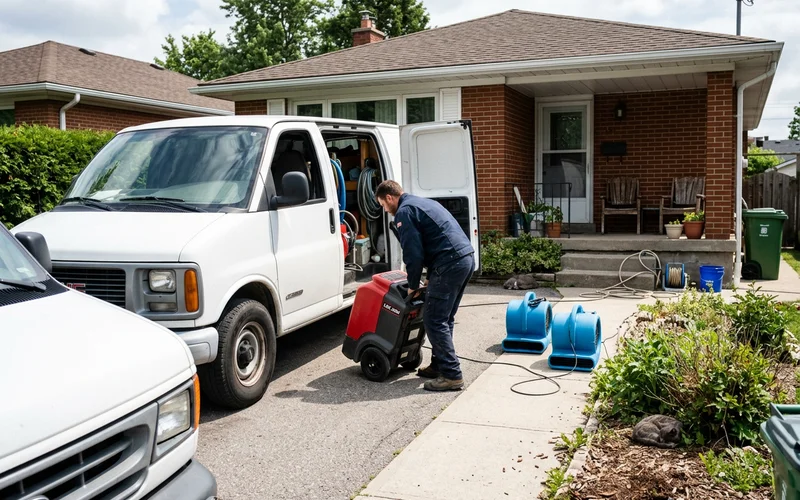
Photographs taken before anything is moved are your best defense. You must capture wide shots of each affected area before zooming in for detail. We always measure the water depth against a fixed reference point like a baseboard.
This documentation is the single most valuable two minutes in the entire process. The time of discovery and the time of onset are crucial data points. We know that prompt reporting materially strengthens a claim against accusations of negligence.
Delayed mitigation invites the argument that additional damage was entirely avoidable. Adjusters expect a written scope detailing exactly what is being removed and treated. Our estimators use Xactimate software to write scopes that adjusters instantly recognize and approve.
Essential Reporting Tools
An adjuster reviewing a scope with clear reasons attached moves much faster. They prefer this clarity over blindly reviewing a random list of charges. We provide daily moisture logs as absolute proof that drying was performed to professional standards.
These logs verify that equipment was actively drying the space. Disposal records are also mandatory, particularly for Category 3 sewage losses. Our teams track biohazard disposal strictly because it is a heavily scrutinized cost line.
Producing all of this paperwork is standard practice on every single job. It serves the quality of the work just as much as the claim itself. We handle this heavy administrative lifting so you can focus on managing the estate.
Essential Documentation Checklist:
- Wide-angle and detailed photographs
- Written Xactimate repair scope
- Daily structural moisture logs
- Certified biohazard disposal receipts
How Direct Billing Works
The financial logistics of a major cleanup can overwhelm any family. Asking an estate executor to front tens of thousands of dollars is rarely practical. We solve this problem by invoicing your insurance carrier directly instead of billing you.
Practically, this means you are not waiting months for a reimbursement check. Your financial exposure is normally limited to the policy deductible. We also manage the conversation around any specific items that the carrier declines.
Regulatory Standards and Fair Processing
Direct billing also means the insurance adjuster directs their technical questions to the contractor. They will ask for moisture readings, photographs, and the strict justification for each scope item. Our project managers have these technical conversations regularly, whereas you likely have not.
The Financial Services Regulatory Authority of Ontario (FSRA) requires insurers to process claims fairly and promptly. Having a professional advocate ensures the insurer adheres to these regulatory standards. We use our industry experience to keep your claim moving without unnecessary delays.
You Choose the Contractor
Insurers maintain lists of preferred vendors and will often suggest one during your initial call. You are absolutely not required to use their recommended company. We want you to know that Ontario regulations guarantee the property owner chooses their own contractor.
Exercising this right does not negatively affect your coverage or your premium. The distinction matters because preferred vendors depend heavily on the insurer for their ongoing revenue. Our loyalty, however, remains strictly with the homeowner or the estate executor.
Specialized Support for Complex Situations
A contractor engaged directly by you scopes the exact work the property actually needs. They are not incentivized to cut corners to save the insurance company money. We bill the carrier either way, ensuring the property is restored completely and safely.
Families need a team that understands the delicate nature of hoarding or estate situations. A standard preferred vendor might lack this specialized empathy and expertise. We prioritize your family’s dignity and privacy throughout the entire restoration process.
Practical Sequence
Call for emergency mitigation before you do anything else. You must report the loss to your insurer as soon as it is safe to do so. We recommend making this call from a dry area outside the affected zone.
Do not delay water extraction while waiting for an adjuster to attend the site. Emergency mitigation is legally expected of you under Ontario policy rules. Our rapid response fulfills your duty to mitigate and protects your coverage.
Protecting Your Claim Status
Failing to stop the damage from spreading will seriously prejudice your case. You must keep detailed receipts for anything you buy or arrange during the emergency. We urge clients to ask for the claim number early in the process.
Give this claim number to your contractor so documentation is filed correctly. If severe contamination is involved in a hoarded home, specific cleanup rules apply. Our comprehensive guide on biohazard coverage covers exactly how that interacts with a water claim.
Dealing with property damage during an estate transition requires clear, immediate action.
Delaying the cleanup only gives the insurance company a reason to deny your funding.
We are here to help you execute every step of a home insurance claim water damage ontario correctly.
Contact our team today to dispatch an emergency response crew to your property. Securing professional help immediately is the smartest financial decision you can make. We will secure the site, document the damage, and protect your family’s assets.