Many families assume an estate cleanup is simply a matter of clearing out personal items. We see the reality of an unattended death decomposition biohazard timeline every single day. The physical situation degrades by the hour.
You need clear facts to make fast decisions during an incredibly stressful time.
Our goal is to explain exactly what is happening beneath the surface and why the damage spreads so quickly. Let’s look at the data, what it actually tells us, and how you can respond effectively.
Why Timing Dominates This Work: Unattended Death Decomposition Biohazard Timeline
Timing dominates this work because decomposition creates two relentless processes that compound damage by the hour. Biological fluids migrate downward into subfloors, and odour compounds penetrate every porous material they touch. With most standard remediation, delaying a few days increases the cost gradually. With an unattended death, waiting changes the nature of the job entirely.
Our crews see the impact of bacterial growth on property damage within the first 48 hours. Bacteria like Clostridium perfringens double rapidly at room temperature, forcing biological material outward through flooring and along joist lines. Odour compounds, principally cadaverine and putrescine, progressively sink deeper into the building’s structural framework.
We scope unattended death cleaning by duration just as much as we measure by square footage. The longer the delay, the further the contamination spreads.
How Penetration Progresses
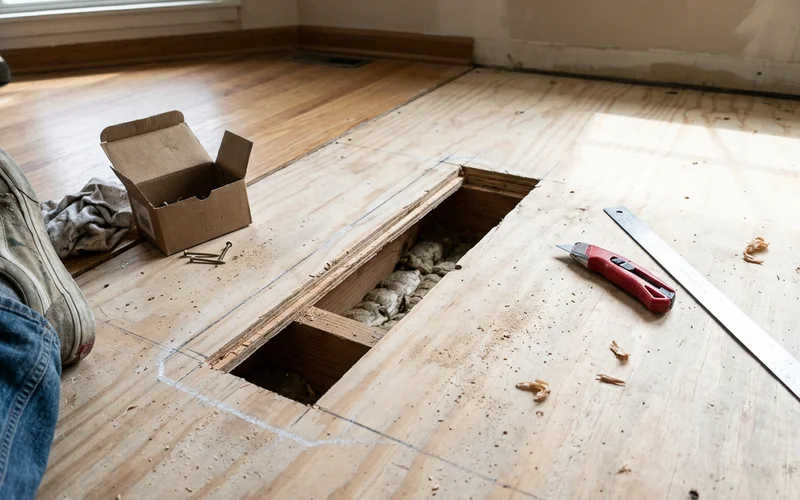
Penetration progresses in stages, moving from surface-level flooring down into the core structural framing of the property. The exact timeline depends heavily on the indoor climate and the specific building materials involved.
Our technicians regularly encounter Canadian homes built with Oriented Strand Board (OSB) subflooring. OSB absorbs biohazardous fluids rapidly, causing the wood strands to swell and trap the contamination deep inside. This material porosity dictates the cleanup scope, because decomposition odour penetration happens almost immediately after.
Early Stage
Contamination remains largely surface-level and on the immediate flooring during the first 24 hours. Remediation is typically contained to that specific area, and the odour component is comparatively light.
Our initial response focuses on sanitizing these non-porous surfaces before fluids can migrate. Prompt action keeps the structural damage to an absolute minimum.
Within Days
Fluid passes through carpet and underlay into the subfloor within a few days. Odour compounds begin bonding into surrounding porous materials, including the drywall at the base of the walls.
We must treat or remove the OSB subfloor during this phase to stop the spread. The scope expands significantly as the fluids penetrate the structural barriers.
Beyond a Week
Penetration reaches the joist cavities once a week has passed. Odour establishes itself throughout the property, migrating into corridors and adjoining units via shared HVAC ventilation in multi-unit buildings.
Our structural removal teams must tear out saturated framing and perform multi-stage odour treatments at this point. The source of the contamination has now embedded itself into the skeleton of the building.
Extended Delays
Structural components may require complete removal after prolonged delays. Odour treatment becomes a massive, standalone phase of the project, frequently requiring adjacent spaces to undergo treatment as well.
| Duration | Typical penetration | Scope implication |
|---|---|---|
| Early | Surface and flooring | Contained remediation |
| Days | Subfloor, base of walls | Structural treatment |
| Over a week | Joist cavities, property-wide odour | Structural removal, multi-stage odour |
| Extended | Framing, adjoining units | Full remediation and rebuild coordination |
Warmth accelerates everything
Summer conditions and heated interiors both speed the process significantly. A property discovered in July after ten days presents very differently from the same property in February.
Why Odour Behaves the Way It Does
Odour behaves stubbornly because cadaverine and putrescine are volatile organic compounds that bond chemically into porous materials rather than just resting on the surface. These compounds trigger intense human disgust responses at a molecular level.
Our sensory systems are incredibly sensitive to these specific gases. The human nose contains Trace Amine-Associated Receptors (TAAR) that detect cadaverine at mere parts-per-billion, processing it instantly as a biological warning signal. That extreme sensitivity explains a frustrating pattern many families describe. A general cleaner treats the property, it smells acceptable for a week or two, and then the odour returns as warmth and humidity reactivate compounds still in the substrate.
We know that nothing was done wrong at the surface level by the initial cleaners. The source simply was not removed.
Permanent resolution requires three mandatory stages to eliminate the threat completely:
- Remove the saturated materials entirely.
- Seal the substrate that cannot be safely removed.
- Oxidise residual airborne compounds using specialized hydroxyl generators or ozone machines.
Our equipment utilizes hydroxyl molecules to destroy these complex odour compounds at the molecular level. Skip any single stage in this sequence, and the odour will inevitably return. The same principle governs protein-based odour removal across all property restoration scenarios.
The Biohazard Side
The biohazard side of an unattended death presents severe health risks because decomposition material carries immense bacterial loads and potential bloodborne pathogens. Insects present at a scene can also track this dangerous material well beyond the immediate area.
Our safety protocols treat every situation as a high-risk environment. The Public Health Agency of Canada notes that severe pathogens like the Hepatitis B virus can survive outside the body on environmental surfaces for seven days or more. When people ask about unattended death cleanup why professional teams are strictly required, this severe risk of bloodborne pathogens is the primary reason.
Remediation therefore involves a strict, regulated process to protect everyone involved:
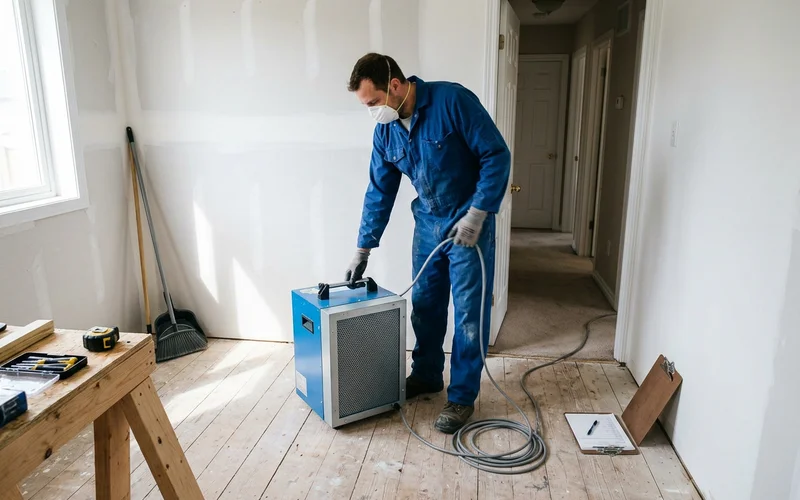
- Establishing containment zones under negative air pressure.
- Wearing full Personal Protective Equipment (PPE).
- Removing all affected physical materials safely.
- Applying hospital-grade disinfection to whatever remains.
- Disposing of materials through licensed Canadian biomedical waste channels with full documentation.
We strictly follow provincial health ministry guidelines for medical waste disposal. Proper documentation protects executors from future liability claims regarding the property.
In Apartments and Multi-Unit Buildings
In apartments and multi-unit buildings, odour and contamination quickly become a building-wide issue because they do not respect unit boundaries. These gases travel rapidly through shared wall cavities, plumbing chases, and HVAC returns. By the time neighbours start complaining, the problem is usually no longer confined to the source unit.
Our first priority in a condo setting is to establish negative air pressure using HEPA-filtered scrubbers. This specialized equipment prevents the building’s own ventilation system from pulling volatile compounds into the adjacent hallways. Treating a neighbor’s complaints without containing the source unit merely masks the symptom.
The correct sequence requires a methodical approach:
- Contain the source unit under negative pressure immediately.
- Remediate the source unit fully to eliminate the biological material.
- Treat the migrated odour in adjacent spaces and shared corridors.
We coordinate directly with property managers and condo boards to execute this sequence efficiently. Managing the logistics properly prevents the situation from escalating into a massive liability for the estate.
What This Means Practically
Practically speaking, if you are an executor or family member, you need to authorize the cleanup as soon as the authorities release the property. Every additional day makes the job larger, the cost higher, and the structural damage worse. There is absolutely no version of this situation that improves on its own.
We understand how difficult it is to manage an estate under these circumstances. You do not have to enter the property yourself, and you do not have to be there while the remediation happens.
Call our team whenever you are ready to take the next step. Our professionals will handle the entire unattended death decomposition biohazard timeline from start to finish, restoring the home safely and respectfully.