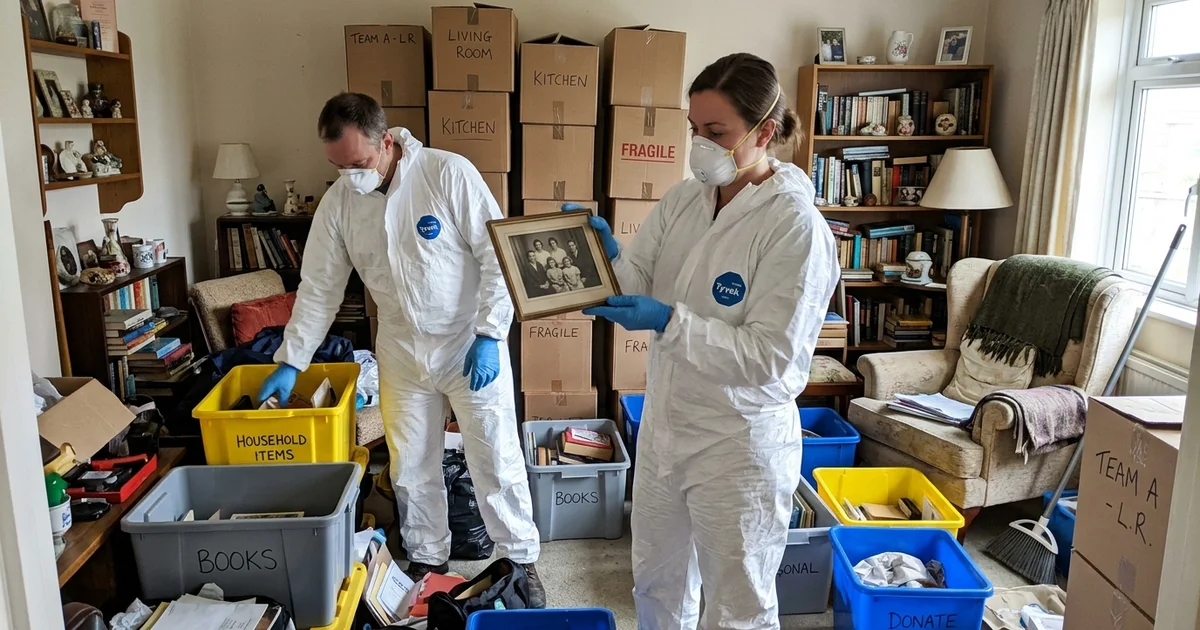
From what we have seen, families often delay property clearances because the sheer volume of material feels impossible to untangle.
Our team understands that managing an estate or stepping in for a loved one brings a massive amount of stress before a single box is even moved. You need a clear plan to transform a chaotic environment back into a safe, functional home.
We will break down exactly what to expect during the hoarding cleanup process so you know exactly what happens on site. This guide outlines the practical steps, the health protocols, and the real timelines involved. Let’s look at the data, what it actually means for your property, and how to safely move forward.
Before Anything Happens: The Assessment
Every job starts with a walkthrough, and this initial visit focuses strictly on practical logistics rather than judgment. We use tools like the Clutter Image Rating (CIR) scale, a 1-to-9 visual system developed by the International OCD Foundation, to objectively measure the volume of material. This standard measurement helps us quickly answer four practical questions:
- Volume: How much physical material requires removal?
- Contamination: Are there biological hazards or pests present?
- Retrieval: What specific valuables or documents must be located?
- Timeline: How many days will the clearance require?
Our assessors also identify hazards that dictate the entire approach. Blocked exits get addressed immediately to ensure safe evacuation routes.
Pest activity means containment protocols and coordination with pest control professionals become mandatory. Signs of water damage behind stacked material warn us that the job might expand once the piles come out.
You receive a detailed written scope from that visit, and the assessment itself costs nothing. If you are considering our hoarding cleanup service, this walkthrough is your starting point, carrying absolutely no obligation.
Step One: Safety and Access
Work begins with making the property structurally safe to navigate. We start by clearing exit routes and identifying sharps or hazardous materials.
This step follows strict Canadian Centre for Occupational Health and Safety (CCOHS) guidelines to manage airborne hazards. Our crews set up physical containment barriers and commercial HEPA air scrubbers that capture 99.97 percent of airborne particles where contamination is present.
Crews work in protective Tyvek suits with N95 or P100 respirators, depending on the specific hazards present. This heavy gear is not theatre, because disturbing accumulated material releases highly dangerous particulate into the air. We regularly encounter several hidden threats in Canadian homes:
- Hantavirus risks from deer mice droppings.
- Hidden asbestos in older structural materials.
- Dense mould spores behind compromised walls.
Nobody should breathe that contaminated air during a clearance.
Step Two: Retrieval
Before bulk removal starts, technicians search carefully for what matters most to the family. We routinely find important documents like CRA tax paperwork, Canadian passports, property deeds, and banking information mixed into daily clutter.
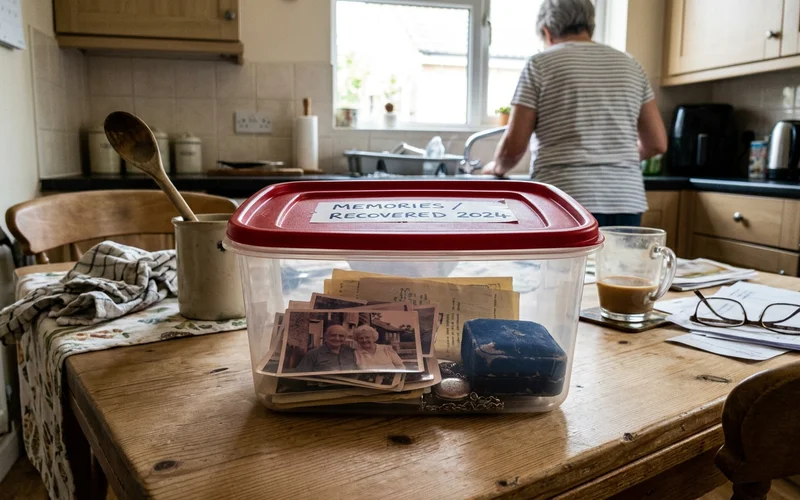
Photographs, sentimental jewellery, required daily medication, and cash are frequently recovered from inside furniture, clothing pockets, and appliances. In severe hoards, cash often turns up in places nobody would ever predict, such as taped behind loose baseboards or stuffed inside hollow curtain rods.
Anything recovered goes into clearly labelled protective containers and is set aside securely for the family. Our policy ensures nothing leaves the property in a bin without being closely inspected first. This careful attention to detail is the single biggest practical difference between a certified remediation and a volume junk clearance.
Step Three: Sorting and Staging
Sorting happens room by room in three broad streams: keep, donate, and dispose. We move at the resident’s pace and check decisions as we go when they are present and participating.
Where a family or executor is directing the work, the team follows their instructions precisely and flags anything that looks significant before it leaves the house. This structured approach prevents important heirlooms from being lost in the chaos.
Sorting Stream Breakdown
Our categorization process follows a clear set of rules to streamline decision-making.
| Stream | Typical Items | Destination |
|---|---|---|
| Keep | Legal documents, family heirlooms, daily essentials | Secured in clear bins for the family |
| Donate | Usable clothing, functioning appliances, clean furniture | Registered Canadian charities (e.g., Diabetes Canada, local shelters) |
| Dispose | Damaged goods, expired products, biological hazards | Authorized waste management facilities |
What we will insist on removing
Spoiled food, contaminated soft goods, pest-infested material, and anything saturated with biological waste. These are health hazards and cannot be salvaged safely. Everything else is a conversation, not a decision we make for you.
Staging matters significantly more than it sounds. We move cleared material out in a controlled sequence rather than piling it up on the front lawn. This strategy keeps the property discreet from neighbors and keeps the physical work moving efficiently.
Step Four: Biohazard Remediation
Once the contents are out, the actual condition of the property becomes visible for the first time. We frequently see jobs expand at this stage, and it is a completely normal part of the process. Animal waste saturating carpets, rodent droppings in insulation, or mould behind furniture that has sat against an exterior wall for years are standard discoveries.
Technicians handle all of it under the appropriate environmental protocols. We remove contaminated porous material, HEPA-vacuum all structural surfaces, and treat the substrate with Health Canada approved disinfectants.
These professional-grade chemicals carry a Drug Identification Number (DIN), proving their efficacy against specific pathogens and viruses. Our team then seals the treated areas where necessary to prevent future structural degradation.
Step Five: Cleaning, Odour, and Handover
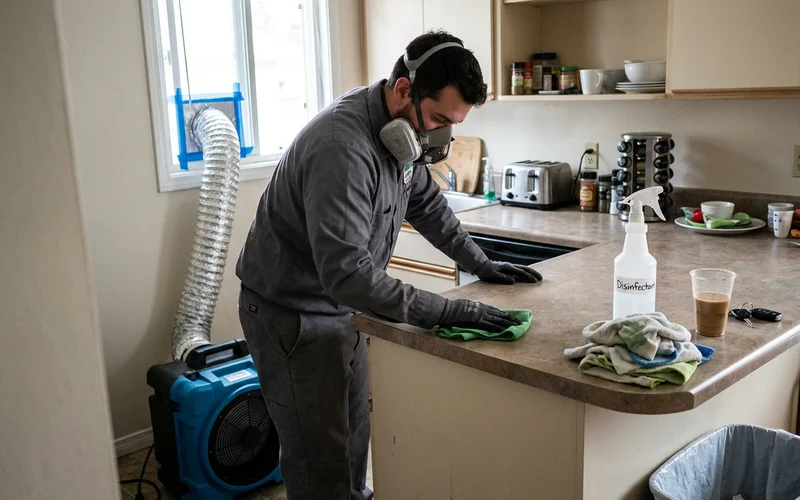
The final stage transforms an empty house back into a liveable property. We perform a full deep clean, which includes total kitchen and bathroom sanitisation, scrubbing appliance interiors, washing cabinet shelving, and cleaning walls and windows.
Commercial hydroxyl generators or ozone machines permanently neutralize the air where deep odours remain after the source is gone. Our team prefers hydroxyl treatment if the space is occupied, as it is entirely safe for people and pets, whereas ozone requires the property to be vacant.
Then, you participate in a final walkthrough to review the completed space. We provide a complete documentation package featuring before and after photographs, the detailed written scope, and official disposal records where biohazard material was involved. Landlords and executors need that record for legal compliance and insurance purposes, while families often want these documents simply as a marker that the overwhelming situation is genuinely resolved.
Timelines and What Affects Them
A single room typically takes a dedicated crew one full day to clear. We find that a standard full-property severe hoard runs two to five days from start to finish.
Properties with exterior outbuildings, heavy contamination, or a phased approach at the resident’s request naturally take longer. That slower pace is a legitimate choice rather than a failure of the process.
Common Timeline Delays
Two specific things extend a job more than anything else during a clearance. The first is undiscovered water or mould damage hidden beneath the material, which is unavoidable.
The second delay comes from decisions that have not been made yet. We strongly recommend resolving these choices before the crew arrives, which is where counselling coordination and family agreement genuinely shorten the work.
If you are weighing whether to start, the assessment costs nothing and gives you a real number instead of a worry. Reach out to book an initial walkthrough so you can finally move forward with confidence.