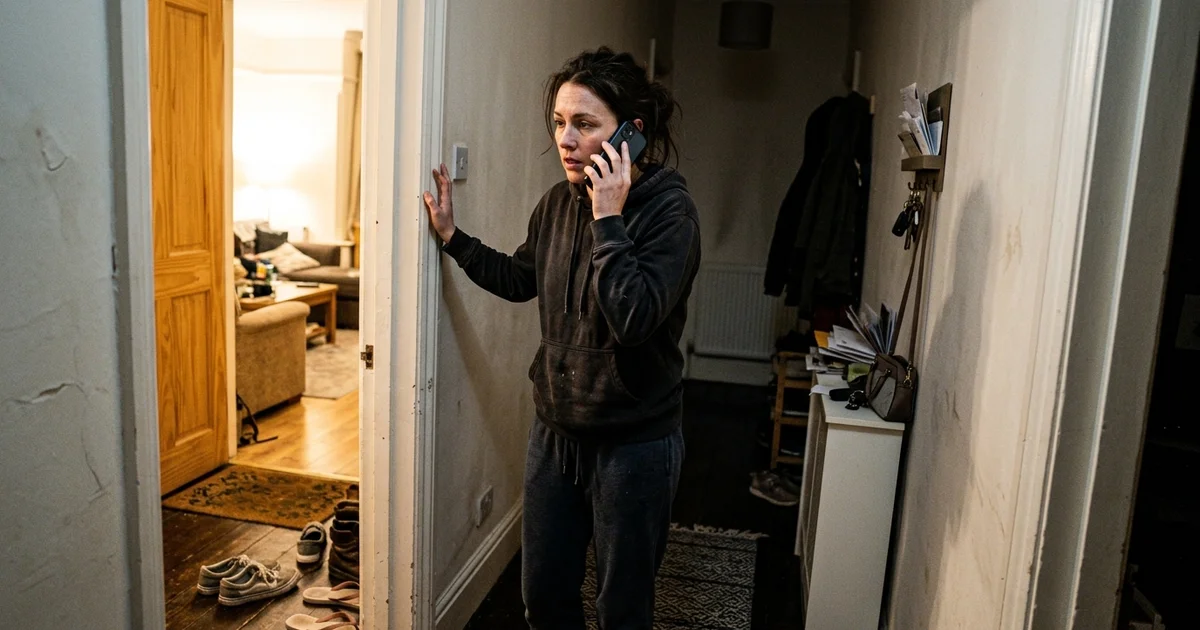
Every property incident brings a wave of confusion. Our professional service team fields hundreds of calls each year from people who have no idea what to say.
Knowing exactly what happens when you call emergency biohazard cleanup makes a stressful moment much easier.
This guide breaks down the exact timeline. We will walk through the dispatch procedures, the on-site assessment, and the final insurance paperwork.
The Call Itself
Most people calling for a 24/7 emergency cleanup process worry about saying the wrong thing. There is no wrong thing.
We only need a few key pieces of information to dispatch a crew. The required details include your address, a brief description of the event, and any current safety risks.
Our dispatchers will also ask if police or the coroner have released the scene. A remediation project cannot begin until authorities give official permission.
We handle every situation with complete discretion. Canadian privacy laws, specifically PIPEDA, ensure your personal information remains strictly confidential.
Our team understands how sensitive these calls are for families. If you are calling on behalf of a relative with hoarding challenges, organizations like the Canadian Mental Health Association often recommend securing professional support first.
We always tell callers what to do in the meantime. The instructions are usually much simpler than people expect:
- Stay out of the affected area entirely.
- Leave contaminated water untouched.
- Do not run a vacuum through a flooded room.
- Take photographs from a safe distance to help your claim later.
Dispatch and Arrival
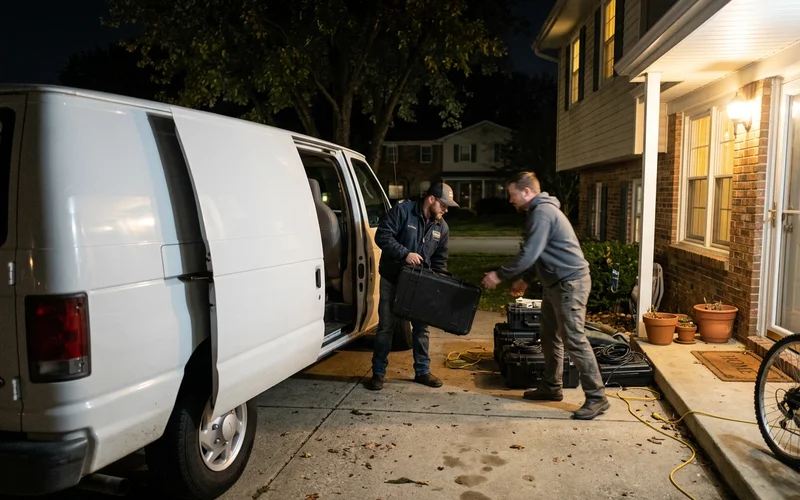
Our crews target a one to two hour arrival time across Greater Hamilton and Kitchener-Waterloo at any hour. Traffic along the Highway 6 corridor can occasionally add time for rural addresses.
We run a priority rural dispatch system for these outlying areas. The technicians load equipment for the full anticipated scope before leaving the facility.
Our approach prevents a property from sitting contaminated while a truck makes a second trip. Priority dispatch provides three main benefits for rural properties:
- Faster containment: Stops standing water from soaking deeper into the subflooring.
- Single-trip efficiency: Eliminates waiting for a secondary truck to deliver specialized air movers.
- Immediate mitigation: Allows the crew to start extracting moisture right after the assessment.
We prioritize your privacy upon arrival. The response vehicles show up completely unmarked.
Our crews do not use any exterior signage or logos that might alert neighbours to the situation. Building management handles service elevator access for apartments and condominiums to keep the process quiet.
For an emergency water damage response, the first hour of extraction matters more than any other hour in the job.
We arrive with the necessary extraction and drying equipment already loaded. This preparation stops secondary moisture from ruining healthy drywall.
The Assessment
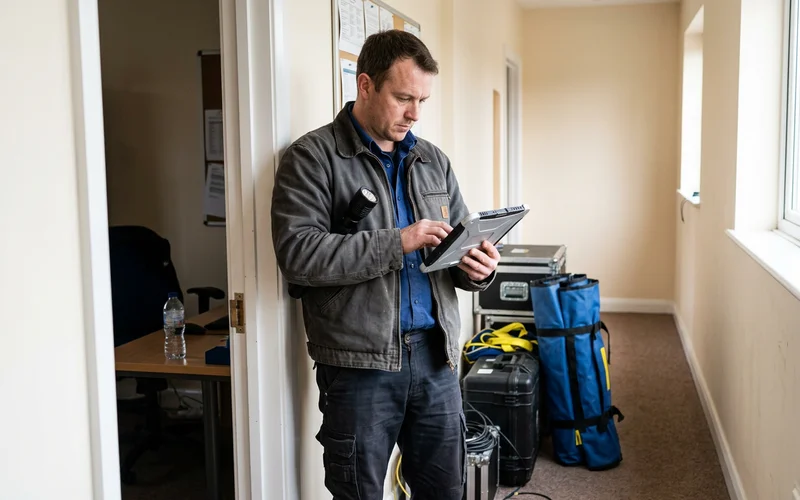
An assessment always happens on arrival before any physical work begins. A lead technician walks the affected area to identify immediate hazards and map the damage.
We photograph the original condition before anything gets disturbed. The technicians then use specialized tools to see what the naked eye misses.
For water losses, this includes moisture mapping using FLIR thermal imaging cameras. Water often travels much further behind baseboards than it appears on the surface.
Our crews follow Ontario Ministry of Labour guidelines to determine which materials require safe removal at biohazard scenes. Both of these mapping steps establish the baseline documentation your insurance adjuster expects.
You then receive a verbal walkthrough of the project scope. We require written confirmation before proceeding with the larger restoration decisions.
Emergency mitigation usually starts immediately to stop the damage from spreading.
What “emergency mitigation” means
Extracting standing water, setting containment, removing an obvious hazard. These prevent the situation deteriorating and are appropriate to start right away. Structural removal and restoration are separate decisions that follow the assessment and, usually, a conversation with your insurer.
The Work
The physical work begins with strict containment to protect clean areas of the property. Crews then remove affected material under proper environmental protocols.
We require all staff to wear CSA-approved respirators and full protective suits. Treatment methods vary heavily depending on the specific job requirements.
Our technicians apply Health Canada approved antimicrobial solutions to disinfect trauma scenes. Odour treatments and structural drying follow the initial removal phase.
We follow a strict four-step workflow for every project:
- Containment: Sealing off the affected zone using heavy plastic barriers.
- Removal: Taking out contaminated materials under tight safety protocols.
- Treatment: Applying industrial disinfectants and setting up drying fans.
- Verification: Testing the completed surfaces to prove successful cleaning.
Verification of the area relies on objective, scientific testing methods. ATP bioluminescence meters measure living organic matter in Relative Light Units.
Our target is a reading below 250 RLU to confirm a biohazard surface is truly clean. Moisture readings against a dry standard verify successful water loss recovery.
We use clearance sampling for mould to prove the indoor air quality is safe again. Verification turns a visual check into a documented result.
Insurance and Paperwork
The final stage involves coordinating with your insurance carrier to cover the mitigation costs. We bill carriers directly for covered losses to reduce your upfront expenses.
You remain responsible for your specific deductible and any denied portions of the claim. The average home water damage claim in Canada reached roughly $25,000 according to 2026 Insurance Bureau of Canada data.
Our documentation package provides everything an adjuster needs to process a claim smoothly. Adjusters expect specific proof of the damage and the cleanup efforts.
| Document Type | Purpose for Insurance Adjuster |
|---|---|
| Pre-Work Photographs | Proves the initial severity of the loss. |
| Moisture Logs | Shows daily drying progress and final stabilization. |
| Disposal Manifests | Verifies legal transport of biohazardous waste. |
| Verification Readings | Confirms the property meets health safety standards. |
A complete file moves a claim much faster than a reconstructed one. Our guide on insurance coverage covers what is typically covered and what is not.
How Long It All Takes
A contained biohazard incident often wraps up in a single day. Water losses typically require three to five days to complete.
We cannot rush structural drying without leaving hidden moisture inside the building materials. Ontario’s humid summer weather can sometimes extend these drying times.
Our biohazard dispatch steps ensure a realistic timeline gets communicated during the assessment. Delayed-discovery scenes needing intense odour treatment usually run three to five days as well.
Here is a breakdown of standard recovery timelines:
- Minor Biohazard Cleanup: 1 day.
- Standard Water Extraction and Drying: 3 to 5 days.
- Unattended Death or Hoarding Recovery: 2 to 5 days.
- Severe Odour Remediation: 3 to 5 days.
We refuse to provide an optimistic schedule just to make a sale. A schedule that slips creates more stress than a longer schedule stated honestly at the start.
If a severe emergency is happening right now, pick up the phone and call.
We do not expect you to have every detail figured out before asking for help. The most important step is simply starting the conversation.